
Clean, renewable power, responsibly run.
Green Grid turns wood that would otherwise be wasted into renewable electricity, under the state and federal permits that govern air, water and land.
Renewable fuel from wood that would otherwise go to waste.
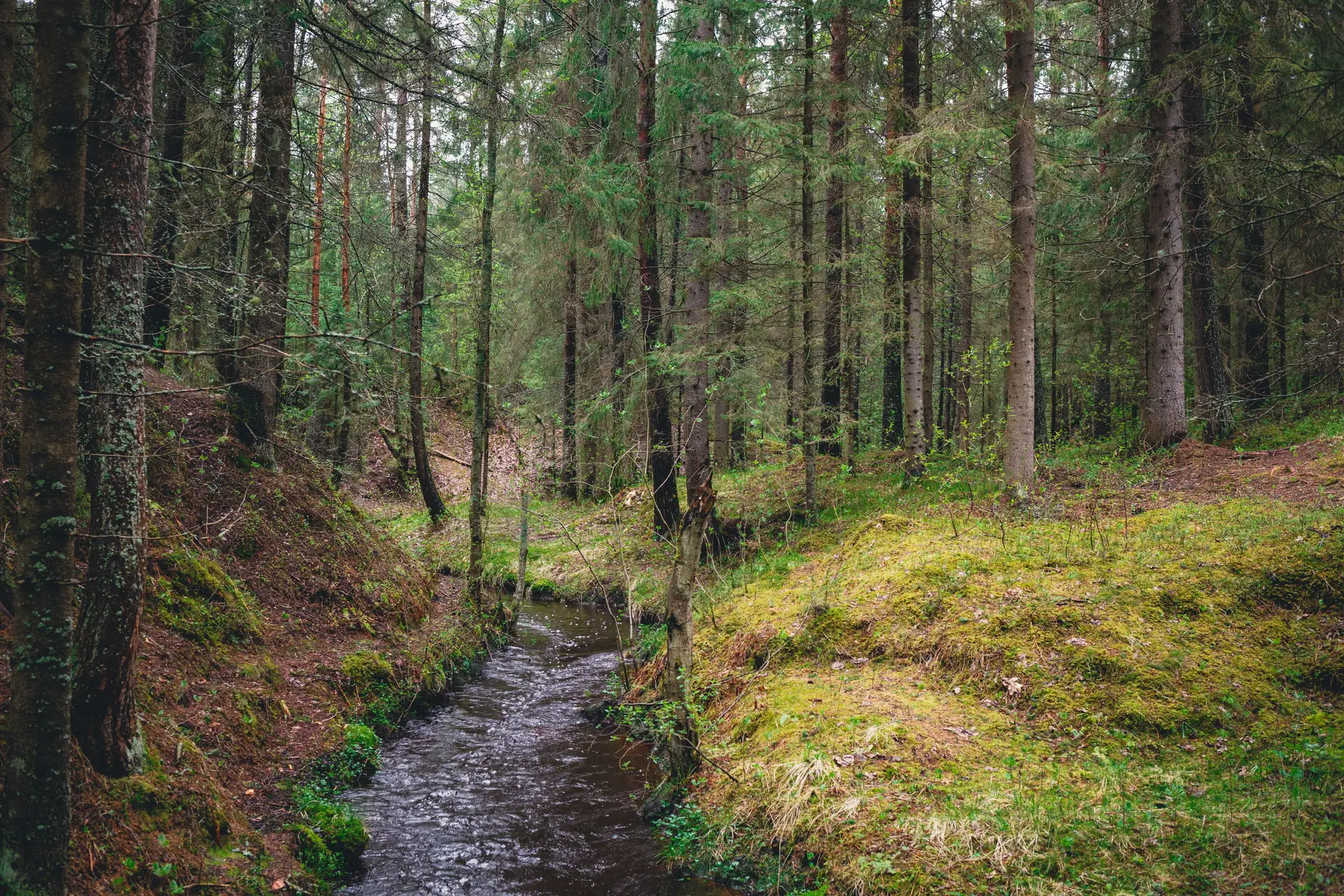
Our fuel is low-grade wood and forest residuals, including the tops, limbs, thinnings, storm-damaged and mill-residual material left over from forestry and sawmilling. Instead of being burned in the open, chipped and landfilled or left to decay, it becomes renewable power, in a closed loop that makes the most of every load.

Renewable fuel, used efficiently.
Green Grid takes the low-grade wood those forests produce, dries it to a controlled moisture and converts it in a zero-oxygen reactor into a clean gas that raises steam and drives turbine generators.
- Wood fiber from working forests carries the routine load
- Natural gas covers start-up and outages only and does not contribute to routine generation
- The design draws more usable electricity per ton than direct combustion delivers
- Working forests regrow the wood, and biochar from the process is sequestered, so the power is renewable and carbon neutral
The plant runs under a state-issued air permit, and its emission limits are set through that review.
We don't use your water. We make our own.
Green wood arrives about half water by weight. Drying it down to the moisture content the process needs pulls that water back out of the fiber, and it is captured rather than vented away. Treated and recirculated, it supplies the plant's own process water, so there is no ongoing municipal draw.
“A plant like this will drain our water supply.”
The water that cools the plant is captured from the wood itself.
- Chips arrive at about 50 percent moisture and enter the reactor at about 10 percent
- That difference is the water the plant runs on
- Captured as the wood dries, treated on site and recirculated on a closed loop
- Cooling is closed-loop and air-cooled
- The surplus can be treated, chilled and sold to the site's industrial user
- None for day-to-day operations
- A one-time fill at commissioning, then recovered process water
- Does not compete with homes, farms or businesses in a dry period
- The closed loop tops up only marginally
- Runs during water restrictions, with no intake to curtail
- Even a closed-loop system needs a one-time fill to commission it and a standing reserve for fire suppression
- The treated storage the site needs anyway carries both
- That reserve is fire suppression water storage for the site's industrial tenant
Still have a question?
We'd rather answer it directly. Reach out and we'll get back to you.